
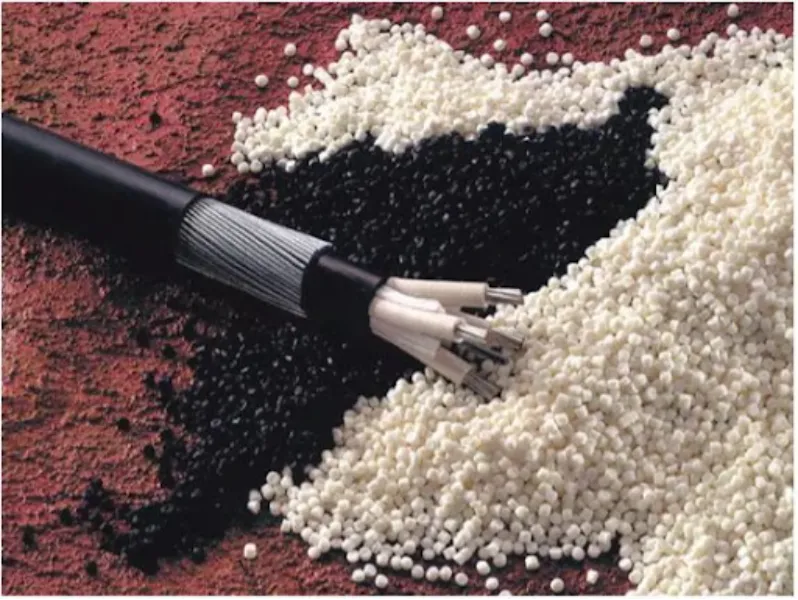
Flexible PVC products must achieve a careful balance. A component may need softness and flexibility while still maintaining suitable processing characteristics, surface quality, durability, and dimensional behaviour. When manufacturers experience inconsistency in these areas, working with an appropriate PVC Rubberised Compound Supplier becomes an important part of troubleshooting.
For manufacturers in Delhi, the most effective approach is to identify the exact production problem before changing formulations.
Identify the Symptom Clearly
A flexible product problem should first be described in measurable manufacturing terms.
Common concerns may include:
- Product feels too hard
- Flexibility varies between batches
- Surface finish is inconsistent
- Material does not process smoothly
- Colour changes unexpectedly
- Extrusion output fluctuates
- Finished parts do not meet expected physical properties
Simply asking for a 'softer compound' may not provide enough information to solve the underlying issue.
Review the Complete Production Process
Raw material is only one variable.
Machine temperature, screw configuration, processing speed, tooling, cooling conditions, contamination, storage, and mixing can also influence the finished product.
Before concluding that the compound is responsible, manufacturers should review whether operating conditions changed at the same time the problem appeared.
Maintaining batch and production records makes this investigation considerably easier.
Match the Compound to the Application
Rubberised or flexible PVC compounds can be used in various manufactured products where flexibility is required. However, each application can have a different performance profile.
A manufacturer should communicate the required:
- Hardness range
- Flexibility
- Colour
- Surface finish
- Processing method
- Product dimensions
- Service environment
- Relevant physical requirements
Where applicable, customer specifications should also be shared.
Use Controlled Trials
Changing multiple production variables simultaneously makes troubleshooting difficult.
A better method is to conduct a controlled material trial while keeping as many other parameters stable as possible. Record machine settings and compare the trial against the currently approved material.
This helps determine whether the new compound actually improves the problem.
Manufacturers should also avoid judging a formulation solely from the feel of raw granules. The finished component under normal processing conditions provides more useful evidence.
Look for Batch Repeatability
Solving a problem once is not enough.
The supplier should be able to reproduce the agreed formulation with reasonable consistency across repeat orders. Otherwise, manufacturers may find themselves adjusting production parameters each time new material arrives.
Batch identification and incoming material inspection can support better control.
Supplier Communication Makes a Difference
A capable supplier should ask questions about the product rather than recommend material solely from a generic grade name.
Aim Plastic supplies PVC compounds and related materials to processors in Delhi and other industrial markets. When evaluating a PVC Rubberised Compound Supplier, manufacturers can benefit from sharing samples, production information, desired hardness, and the specific problem they are trying to correct.
This allows the material discussion to focus on application requirements rather than guesswork.
Build Stability Into Flexible PVC Production
Flexible-product manufacturing is most predictable when formulation and process conditions are treated as connected variables.
If a problem appears, document when it started, identify the affected batches, compare machine settings, inspect storage conditions, and test material changes systematically.
Choosing the right compound is important, but reliable manufacturing comes from combining suitable material with controlled processing. A supplier that understands those relationships can become more useful to a manufacturer than one that simply provides a catalogue of standard grades.
Keywords