The right compound depends on whether it must preserve electrical separation around a conductor or protect the finished cable from abrasion, oil, sunlight, impact, and fire exposure. By the end, you will be able to match the material to the cable’s voltage, environment, temperature, flexibility, and processing line, then approve it with measurable evidence rather than a label such as “cable-grade PVC.”
Key takeaways
- Select insulation or sheathing before selecting the compound.
- Match temperature, fire, smoke, halogen, and service-environment requirements.
- Compare volume resistivity, dielectric strength, ageing, and processing data.
- Approve every batch with documents, checks, and an extrusion trial.
Start with the cable layer, temperature rating, and service environment
Choose the cable layer before choosing the compound: insulation surrounds the conductor, while sheathing protects the completed cable from its surroundings.
| Layer | Main priorities | Typical failure if mismatched |
|---|---|---|
| PVC insulation compound | Dielectric strength, volume resistivity, low moisture uptake, conductor adhesion, dimensional uniformity | Leakage, breakdown, uneven wall thickness, or poor bonding |
| PVC sheathing compound | Abrasion, tear, impact, notch, oil, sunlight, and mechanical protection | Cuts, cracking, swelling, or damage during installation and service |
A formulation suited to insulation is not automatically suitable for a sheath. A PVC sheathing compound needs mechanical and environmental resistance that a high-dielectric PVC insulation compound may not provide.
For low-voltage power cables under IEC 60502-1, ordinary PVC insulation has a 70 °C maximum continuous conductor temperature and a 160 °C conductor short-circuit temperature. The PVC sheath categories differ: ST1 and ST2 sheath compound categories correspond to 80 °C and 90 °C maximum continuous operating temperatures.
Do not treat a 90 °C sheath designation as a 90 °C conductor-insulation rating.
Before requesting material, provide:
- Conductor material and strand construction.
- Voltage class and required insulation thickness.
- Installation temperature and expected conductor temperature.
- Moisture exposure, sunlight, flexing, and installation movement.
- Contact with oil, fuel, solvents, or other named chemicals.
For oil service, identify the actual fluid, temperature, exposure time, and required product-standard test. “Cable-grade PVC” is not a sufficient specification.
Choose soft PVC, rubberised PVC, FRLS, ZHFR, or another material by risk
Standard flexible PVC is the practical choice when installation cost, ordinary flexibility, voltage rating, and conventional electrical performance control the decision. Move to rubberised PVC when repeated bending or softer handling matters; choose FRLS PVC when the project specification demands flame resistance with controlled smoke.
| Service case | Preferred path | Check before choosing |
|---|---|---|
| Building wire | Soft PVC cable compound | Voltage class, fixed installation, conductor temperature, and installation cost |
| Flexible cords | Rubberised PVC | Repeated flexing, bend radius, abrasion, and plasticizer retention |
| Submersible cable | PVC or ZHFR compound | Continuous water exposure, moisture uptake, pressure, insulation resistance, and sealing |
| Automotive wiring | Flexible PVC or specialist compound | Oil, fuel, heat, vibration, sunlight, and the vehicle wiring standard |
| Telecommunications cable | FRLS PVC or ZHFR compound | Smoke, acidity, corrosivity, halogen limits, signal insulation, and fire-zone rules |
| Heavy-duty industrial sheath | Rubberised PVC or specialist PVC | Oil, sunlight, impact, tear, abrasion, flexing, and chemical exposure |
Choose a ZHFR compound or another halogen-free system when the installation requires low halogen, low acidity or corrosivity, and smoke control. PVC’s chlorine content supports flame performance but can produce hydrogen chloride and corrosive smoke during burning; “low smoke” alone does not prove halogen-free compliance.
Replacing PVC with halogen-free material changes moisture response, mechanical properties, processing conditions, and price. Name the actual oil, water exposure, sunlight dose, flexing cycle, voltage, fire test, and budget before accepting a grade.
Compare the technical data sheet beyond hardness and tensile strength
Approve a PVC compound only after its PVC compound technical data sheet gives Shore A hardness, tensile strength in MPa, elongation at break, volume resistivity in ohm-centimetres, dielectric strength kV/mm, density, operating temperature, and named flame-test results. These figures screen a grade; they do not prove service life.
| Measurement group | Use it for | Do not infer |
|---|---|---|
| Mechanical: Shore A, tensile strength, elongation | Handling, approximate stiffness, strength, and stretch | Hardness does not prove flexibility retention, dielectric performance, plasticizer stability, or long-term ageing |
| Electrical: volume resistivity and dielectric strength kV/mm | Insulation quality and resistance to current leakage | Room-temperature values do not prove performance after heat, moisture, or oil exposure |
| Service: density, operating temperature, flame results | Formulation control and fire-risk screening | A flame result is not automatic approval for your cable standard |
Demand the test method, specimen conditioning, ageing temperature and duration, and acceptance limits. Values from different methods are not directly comparable.
- Tensile strength and elongation after ageing
- Loss of mass
- Heat shock
- Pressure at high temperature
- Low-temperature properties
- Resistance to cracking
For oil contact, name the actual oil, temperature, exposure time, and product-standard test. Request migration, extraction, and heat-ageing data for the intended environment. More plasticizer can improve flexibility while lowering hardness and heat resistance, or increasing migration and extraction risk.
Match the compound to the extrusion line, conductor, and wall thickness
Qualify a compound on the actual PVC cable extrusion processing line, not from a laboratory certificate alone. Run the intended screw, die geometry, throughput, residence-time range, and line speed; a different shear history can produce a different cable.
Match conductor size and strand construction to insulation thickness, die dimensions, concentricity, adhesion, and take-up speed. Thin-wall insulation demands stable melt flow, accurate metering, clean dispersion, and a narrow processing window. Heavy sheathing needs toughness, surface quality, and sufficient melt strength to avoid sag, tearing, or roughness.
Record these settings during the trial:
- Screw design and screw speed
- Throughput and melt temperature
- Residence time and die dimensions
- Cooling-water temperature and take-up speed
Excessive melt temperature, residence time, or shear can degrade PVC, causing discoloration, hydrogen chloride evolution, plate-out, and lost mechanical or electrical performance. Copper compatibility requires one assessment of conductor material, strand coating, heat stabilizer system, and thermal-ageing evidence; an unsuitable formulation can discolor or deteriorate at the PVC–copper interface.
Run a controlled extrusion trial and measure thickness at multiple points around and along the cable. Inspect the surface, record spark test results, and compare tensile strength and elongation with the purchase specification. Mark pass or fail for start-up scrap, dimensional stability, and repeatability at the intended line speed.
A compound that passes a data-sheet test but fails these production checks is not qualified.
Approve each batch with documents, checks, and a production trial
Release a PVC compound batch only after documents, incoming-batch inspection, and a controlled production trial meet the signed purchase specification.
- Match the batch number and manufacturing date to the delivery note and purchase order.
- Inspect the packaging seal; reject damaged or opened bags pending investigation.
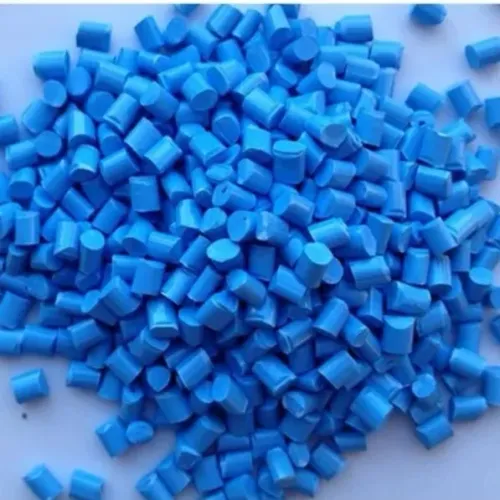
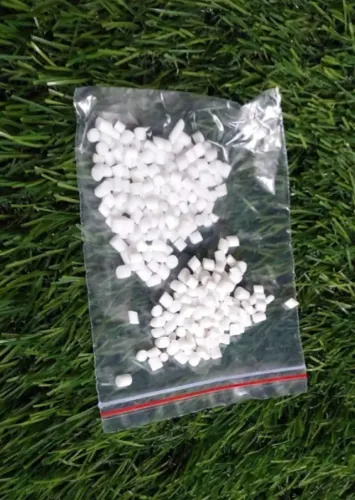
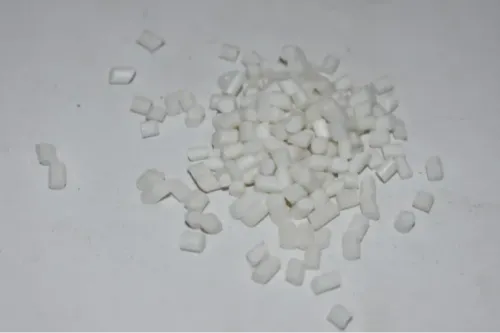
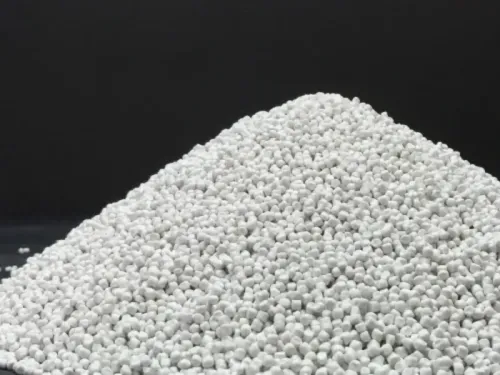
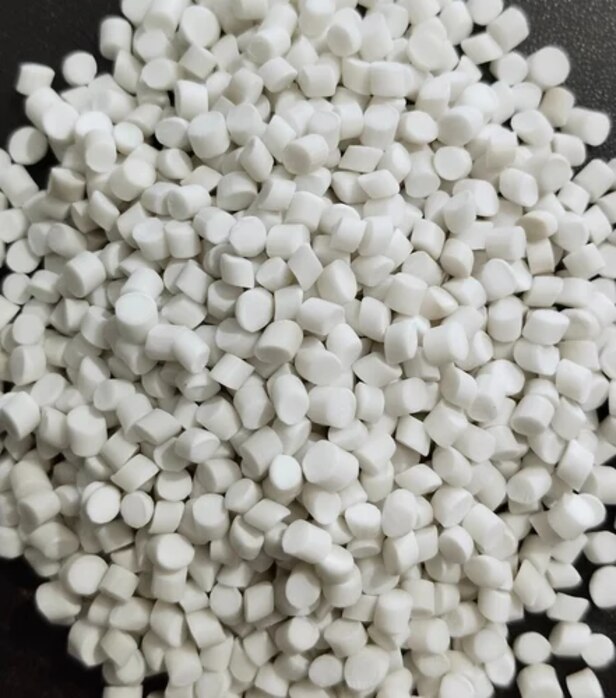
- Examine pellets for colour variation, dust, agglomerates, moisture, and foreign contamination.
- Obtain the certificate of analysis PVC and confirm it names the same formulation or grade, test methods, reported values, and specification limits requested in the purchase order.
- Request market-specific declarations. For RoHS homogeneous material, verify lead, mercury, hexavalent chromium, PBB, PBDE, DEHP, BBP, DBP, and DIBP at 0.1% maximum each, and cadmium at 0.01% maximum.
- Demand written test evidence for flame, smoke, acidity or corrosivity, oil, sunlight, and ageing claims; a marketing label is not proof.
Compare suppliers against evidence, not catalogue language.
| Supplier comparison | Evidence to compare | Warning sign |
|---|---|---|
| Traceability | Batch records, manufacturing date, retained samples | Unmatched labels or missing records |
| Technical control | Identical test methods, limits, and current certificate | Values without methods |
| Production support | Trial parameters, testing, and corrective action | No trial or failure process |
A cable compound supplier evaluation should also compare repeatability, response time, documentation quality, and trial support. Aim Plastic is useful when it connects a documented grade and traceable batch to your exact cable construction. Approve the grade only when the controlled trial passes dimensional, electrical, mechanical, and visual checks at the intended line speed.
Related products
 | PVC Cable Compound Aim Plastic has established itself as one of Delhi's leading PVC cable compound manufacturers, producing specialized formulations that meet the... View product → |
 | PVC Rubberised Compound Suppliers PVC Rubberised Compound Suppliers ₹95 Aim Plastic has established itself as a leading PVC rubberised compound supplier in Delhi, providing manufacturers with high-performance flexible... View product → |
Frequently asked questions
How do insulation and sheathing compounds differ?
Insulation surrounds the conductor and requires reliable electrical performance. Sheathing covers the completed cable and must resist abrasion, moisture, chemicals, sunlight, and mechanical damage according to the service environment.
How should you choose between soft PVC, rubberised PVC, FRLS, and ZHFR?
Choose by the dominant risk: flexibility for repeated bending, rubberised PVC for demanding handling, FRLS for reduced flame spread and smoke, and ZHFR when low smoke and low halogen emissions are required. Confirm the required fire and emissions standard before ordering.
Which technical data should you compare beyond hardness and tensile strength?
Compare elongation, volume resistivity, dielectric strength, insulation resistance, thermal ageing retention, cold-bend performance, flame behaviour, smoke performance, density, and processing temperature.
Why must the compound be matched to the extrusion line and wall thickness?
Screw design, melt temperature, line speed, die geometry, conductor material, and wall thickness affect melt stability, surface finish, concentricity, adhesion, and cooling. Run a production trial before approval.
What should you check before approving a PVC cable compound batch?
Request the batch number, technical data sheet, certificate of analysis, and conformity documents. Check appearance, colour, pellet consistency, moisture, and key electrical and mechanical results, then approve the batch after a controlled extrusion trial.
Related product
 | FRLS PVC Compound Suppliers ₹98 Aim Plastic has established itself as a premier FRLS PVC compound supplier in Delhi, providing manufacturers with high-performance flame retardant,... View product → |