A PVC part can change shade, gloss, opacity, hardness, or processing behaviour even when the same nominal pigment formula is used. By the end, you will know how to calculate the correct let-down ratio, feed the concentrate into different PVC processes, control formulation variables, and approve colour with measurable production evidence.
Key takeaways
- Calculate let-down from pigment concentration and target dosage.
- Feed masterbatch where mixing delivers complete dispersion before forming.
- Control dispersion, fusion, resin, stabiliser, and processing temperature together.
- Approve colour with instrument readings and a production trial.
What PVC Masterbatch Contains—and How It Differs from Other Colouring Options
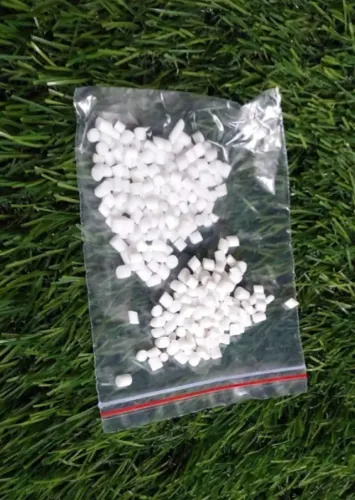
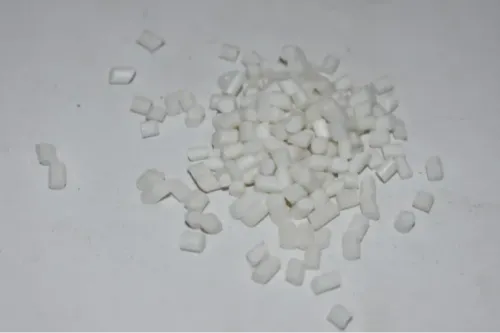
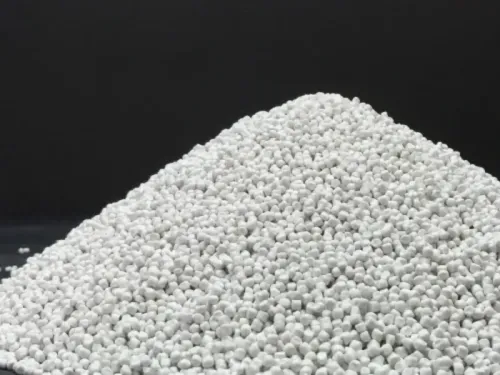
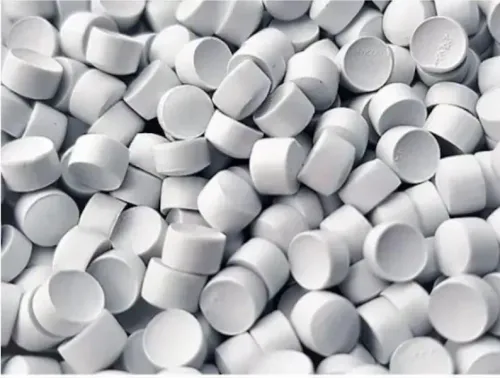
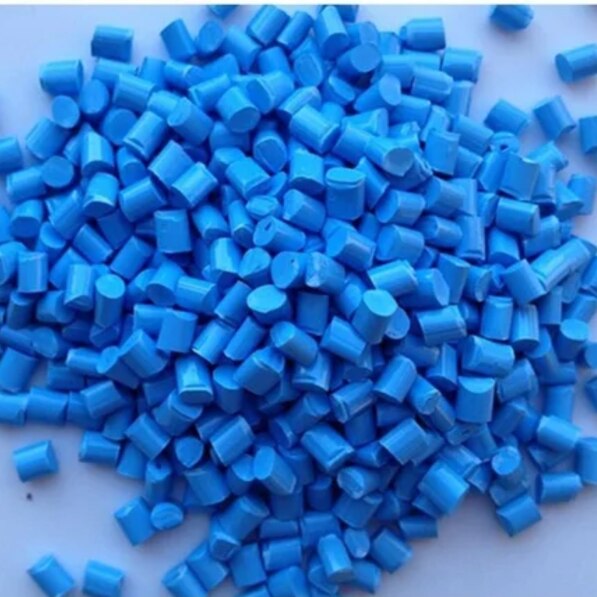
PVC masterbatch is a concentrated pigment or additive package dispersed in a PVC-compatible carrier base. The pigment carrier lets you meter colour into the production mix while supporting wetting, dispersion and fusion.
A PVC colour concentrate is therefore more than dry pigment: its carrier, pigment loading and recommended addition rate form part of the colour specification.
| Option | What it contains | When it applies |
|---|---|---|
| Pre-coloured compound | PVC resin, stabilisers, plasticisers, fillers and colour already compounded | Choose it for the simplest colour control when the formulation will not change; it reduces dosing work but limits flexibility. |
| Liquid colour | Pigment or dye in a liquid vehicle | Use it only with equipment and PVC chemistry designed for liquid dosing; spills, metering errors and vehicle incompatibility can cause shade or surface defects. |
| Dry pigment | Unbound pigment powder | Use it when you control high-shear dispersion and formulation precisely; poor wetting creates specks, streaks and uneven gloss. |
| Ready-mixed granules | Pre-blended coloured PVC granules | Choose them for convenient, repeatable feeding when a fixed grade and shade suit the entire production run. |
| PVC masterbatch | Concentrated pigment in a compatible carrier | Choose it when you need flexible dosing, quick shade changes or one concentrate for controlled production mixes. |
Check the carrier against the actual PVC system. Rigid and flexible PVC need not accept the same carrier: incompatibility can change fusion, gloss, hardness, weld lines or additive migration. Qualify the concentrate with the real resin supply, because K-value, porosity, particle size and filler content affect pigment uptake and dispersion.
How to Calculate Let-Down Ratio Without Losing Colour Repeatability
A 1.00% addition means 1 kg of PVC masterbatch in every 100 kg of finished blend, giving a let-down ratio of 1:99 masterbatch to base PVC. Dosing 0.90 kg instead cuts colourant input by 10% relative to the specification, even though the error is only 0.10 percentage points.
1. Confirm the target pigment loading in the finished product and the pigment concentration in the concentrate. For example, a target of 0.12% pigment with a masterbatch containing 12% pigment gives this colour strength calculation: 0.12 ÷ 12 × 100 = 1.00% PVC masterbatch dosage.
2. Convert the percentage into a weighed batch. For 250 kg of finished blend, weigh 2.50 kg of masterbatch and 247.50 kg of PVC compound. Keep the total at 250 kg; do not add 2.50 kg to an existing 250 kg of resin.
3. If the concentrate changes, recalculate the addition: new dosage = old dosage × old pigment concentration ÷ new pigment concentration. A 15% pigment concentrate replacing a 12% product therefore needs 0.80% dosage to deliver the same nominal pigment loading.
4. Lock the dosage, let-down ratio, resin grade, filler level and mixing method into the colour specification. Verify the result with a production-condition plaque and instrumental colour measurement; pigment percentage alone cannot account for carrier, opacity or dispersion differences.
Where to Feed Masterbatch in Extrusion and Injection Moulding
Feed PVC masterbatch into the resin stream before melting, not onto a hot barrel surface. In PVC extrusion, use a gravimetric feeder at the main hopper or a calibrated side feeder, then allow the screw to provide distributive mixing.
In PVC injection moulding, dose it at the feed throat with the PVC resin, or blend both materials before loading the hopper.
- Confirm that the carrier matches the formulation. A carrier suitable for a PVC rigid formulation can change fusion, gloss, plate-out or migration in flexible PVC.
- Set the feeder to the calculated let-down rate and verify its actual output by collecting material for a timed weight check. A small dosing error becomes a visible shade shift at low masterbatch additions.
- Use the same feeding point, screw settings, barrel temperatures and residence time for colour trials and production. A laboratory plaque can match while production parts show streaks when shear and fusion differ.
- Inspect the first mouldings or extrudate for specks, streaks, gloss changes and unmixed concentrate before releasing the run.
A masterbatch premix is better when the batch is small, the dosage is low, feeding pulses are visible, or the feeder cannot maintain stable accuracy. Blend the masterbatch with the weighed PVC resin until distribution is uniform, then charge the hopper.
Direct dosing suits steady, high-volume production with a calibrated feeder and consistent resin supply; it avoids extra blending time but exposes colour control to feeder variation.
Why Dispersion and PVC Formulation Variables Change the Finished Colour
A matching pigment formula does not guarantee a matching colour. Incomplete pigment dispersion leaves agglomerates that appear as streaks, specks, local shade shifts, or gloss patches; the same pigment loading produces different results after changes in mixing order, shear, screw speed, melt temperature, residence time, or feed consistency.
PVC resin K-value, particle-size distribution, porosity, bulk density, and filler content also change powder uptake and fusion. A resin that absorbs the concentrate differently can alter pigment distribution, opacity, surface gloss, and fusion from one batch to the next.
| Visible change | Common material causes | Common machine causes |
|---|---|---|
| Streaks or specks | Agglomerated pigment, poor carrier compatibility, contaminated resin | Insufficient shear, bridging at the feed throat, uneven dosing |
| Shade drift or gloss change | Resin K-value shift, altered filler or TiO2 grade, wrong let-down rate | Melt-temperature change, different screw speed or residence time |
| Opacity loss | Poor TiO2 dispersion, unsuitable rutile or anatase grade, thinner section | Incomplete fusion, reduced mixing, inconsistent wall thickness |
| Hardness change | Carrier mismatch, plasticizer ratio, rigid PVC used against flexible PVC requirements | Excessive heat, residence time, or uneven additive distribution |
Treat the addition rate as part of the colour specification. A carrier designed for rigid PVC is not automatically suitable for flexible PVC; incompatibility can change fusion, gloss, plate-out, additive migration, and hardness.
For outdoor products, compare colour retention using the same accelerated-weathering method and exposure cycle, because lightfastness, stabilizers, thickness, and surface finish affect the result.
How to Approve a PVC Colour with Measurements and a Production Trial
Approve a PVC colour only after instrument readings, a controlled production trial, and performance evidence agree. A laboratory plaque alone can hide failures caused by extrusion or injection fusion, residence time, shear, cooling, and surface finish.
1. Measure the approved standard and trial plaque with a spectrophotometer. Record CIELAB L*, a*, and b* values, illuminant, observer angle, backing, and measurement geometry. Use ASTM D2244 colour difference to calculate Delta E, but set the actual tolerance with the buyer; the standard does not choose it for you.
2. Make plaques with the production PVC resin, filler, plasticizer, stabilizer package, equipment type, thermal history, and agreed masterbatch addition rate. Record the batch number, dosage, melt temperature, screw speed, residence time, and surface finish. A colour approved at one let-down ratio can shift at another.
3. Run the masterbatch on the intended extrusion or injection machine and compare several samples from the start, middle, and end of the run. Inspect for streaks, specks, gloss change, plate-out, weld-line variation, and fusion problems. Confirm that the carrier suits rigid or flexible PVC rather than assuming one works for both.
4. Test the finished parts for the required exposure, heat ageing, migration, hardness, and electrical properties. Black formulations need separate evidence for jetness, UV durability, resistivity, and rheology. Aim Plastic can use this same evidence package to distinguish a repeatable formulation from a colour-only match.
Related products
 | PVC Masterbatch Manufacturers Aim Plastic excels as one of Delhi's specialized PVC masterbatch manufacturers, producing high-performance color concentrates and functional... View product → |
 | Pvc Masterbatch ₹150 UV Masternatch These Masterbatch are used for providing safety of colors in products from Sun rays. View product → |
Frequently asked questions
What does PVC masterbatch contain?
It contains concentrated pigments or additives dispersed in a PVC-compatible carrier that supports metering, wetting, dispersion, and fusion.
How do you calculate PVC masterbatch let-down ratio?
Divide the masterbatch mass by the total finished compound mass, then multiply by 100. Keep resin, additives, and processing conditions fixed when comparing trials.
Where should you feed PVC masterbatch during extrusion or injection moulding?
Feed it at a point that gives the material enough downstream mixing for complete dispersion before the die or mould, following the equipment supplier’s dosing limits.
Why can the same PVC colour change during production?
Pigment dispersion, PVC resin grade, stabiliser level, filler, fusion, temperature, residence time, and surface finish all influence the finished colour.
How should you approve a PVC colour?
Measure trial samples against an approved standard under controlled lighting, record colour values and process conditions, then confirm repeatability in a production trial.