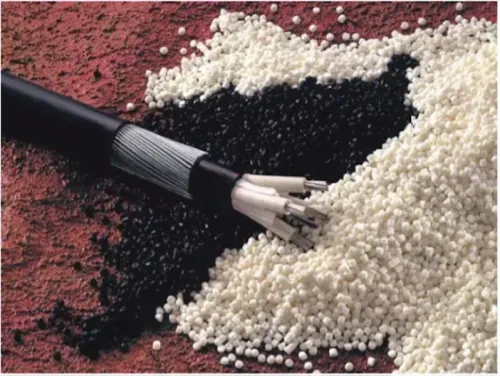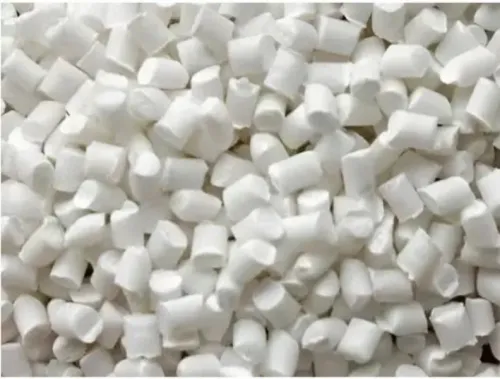
When PVC plastic granules enter a production line, their quality can affect much more than the appearance of the finished product. Material consistency may influence processing stability, dimensions, flexibility, surface characteristics, and production efficiency.
This makes incoming material evaluation an important part of procurement and quality control.
For manufacturers in Delhi handling regular extrusion, moulding, cable, profile, and related production, a structured checklist can make PVC granule selection more reliable.
Confirm the Intended Application
Never evaluate a PVC grade without knowing its intended use.
Ask whether the granules are required for cable applications, flexible components, profiles, transparent products, moulded items, or another industrial product.
The same material characteristics are not appropriate for every application.
An application-based specification gives purchasing and production teams a common reference point.
Check Physical Consistency
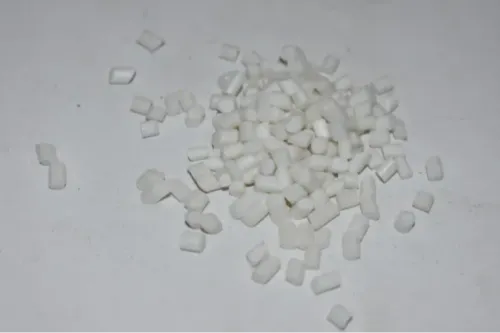
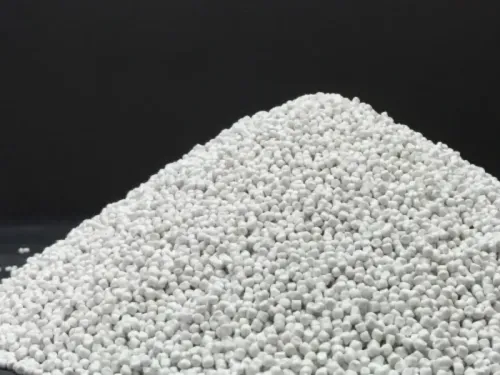
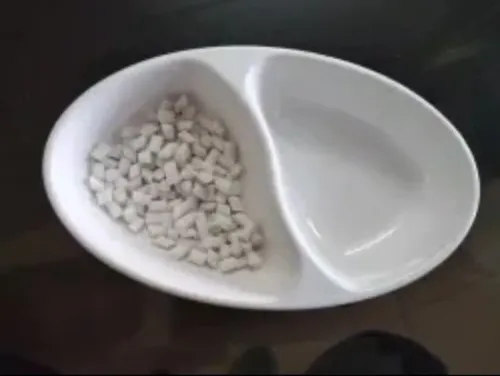
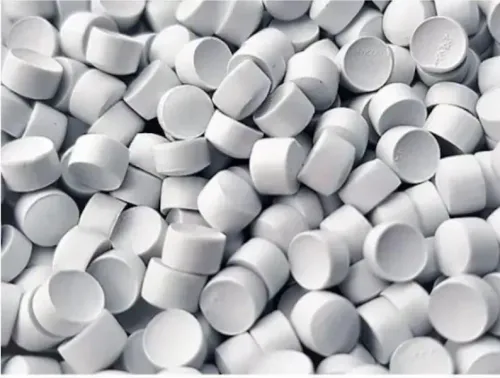
Visual inspection cannot confirm every technical property, but it can reveal obvious inconsistencies.
Review the material for:
- Reasonably uniform granule appearance
- Expected colour
- Visible contamination
- Unexpected foreign particles
- Significant variation between supplied batches
Any unusual observation should be investigated before material enters a large production run.
Verify Relevant Technical Requirements
The required parameters depend on the finished product.
A manufacturer may need to evaluate hardness, colour, flexibility, specific gravity, transparency, mechanical characteristics, processing behaviour, or other application-specific properties.
Rather than requesting every possible test, focus on parameters that directly affect the product.
This makes quality control more meaningful.
Run a Controlled Processing Trial
Laboratory information is useful, but actual machine behaviour also matters.
A production trial can help determine whether the material is compatible with existing equipment and settings.
During the trial, record:
- Processing temperature
- Machine speed
- Material feeding behaviour
- Surface quality
- Finished dimensions
- Rejection observations
- Any setting changes required
Keeping these records makes future batch comparisons easier.
Inspect the Finished Product
Material should ultimately be judged according to the product it helps create.
A cable manufacturer may inspect insulation coverage, dimensions, flexibility, and surface finish. A profile manufacturer may focus on shape, dimensional consistency, and appearance.
The inspection criteria should reflect the actual customer requirement.
Compare Batch Repeatability
A successful first trial is only part of supplier evaluation.
Manufacturers using PVC regularly need material that can support repeatable production. Large differences between batches may create additional adjustment work and complicate process control.
Procurement teams should track batch performance over time rather than treating every purchase as an isolated transaction.
Review Packaging and Storage Practices
Packaging should support clean handling and appropriate storage.
Once received, material should be stored in an organised environment and protected from contamination. Clearly identifying different grades and batches can prevent accidental mixing.
These simple practices are particularly important when a factory uses several PVC formulations.
Include Supply Capability in the Checklist
Aim Plastic serves the industrial PVC material segment with PVC compounds, masterbatch, and plastic granules.
Manufacturers evaluating PVC plastic granules should consider technical suitability together with quantity requirements, supply planning, and communication about application needs.
A useful procurement checklist therefore goes beyond asking whether a material is available. It examines whether the granules process predictably, meet the required finished-product characteristics, remain consistent between batches, and can be supplied in line with production planning.
That broader evaluation helps manufacturers build a more dependable raw-material process.
Keywords