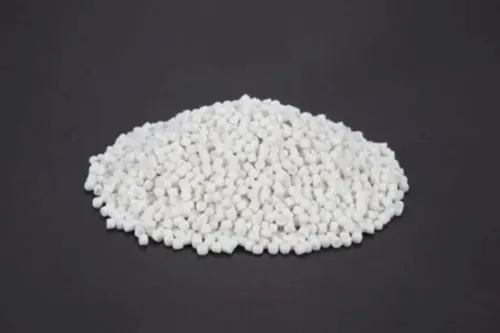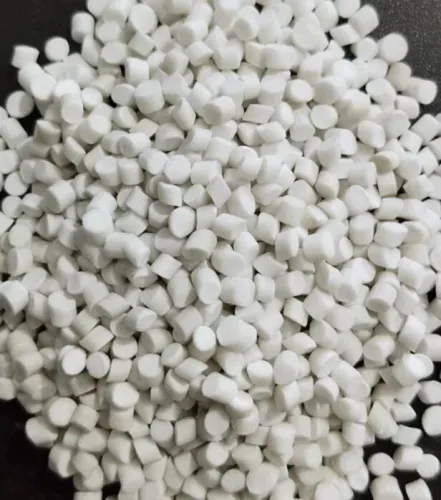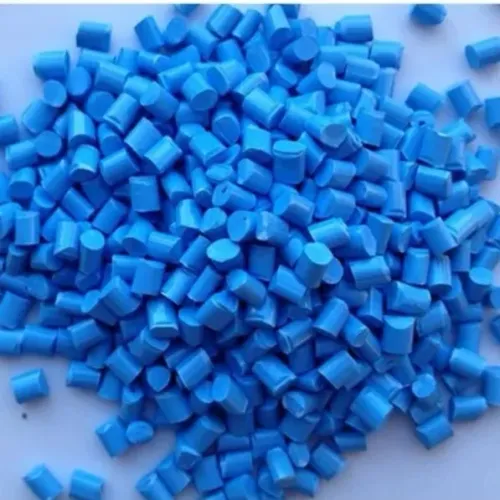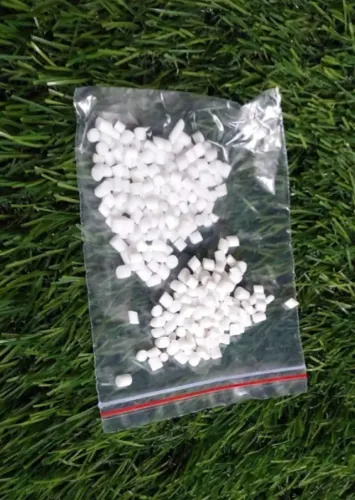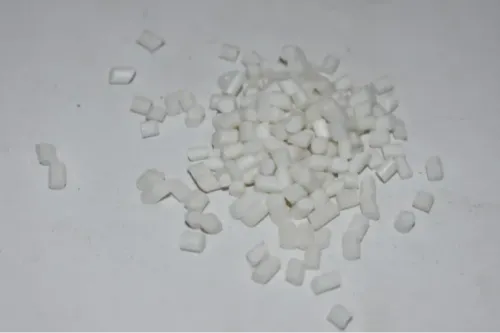
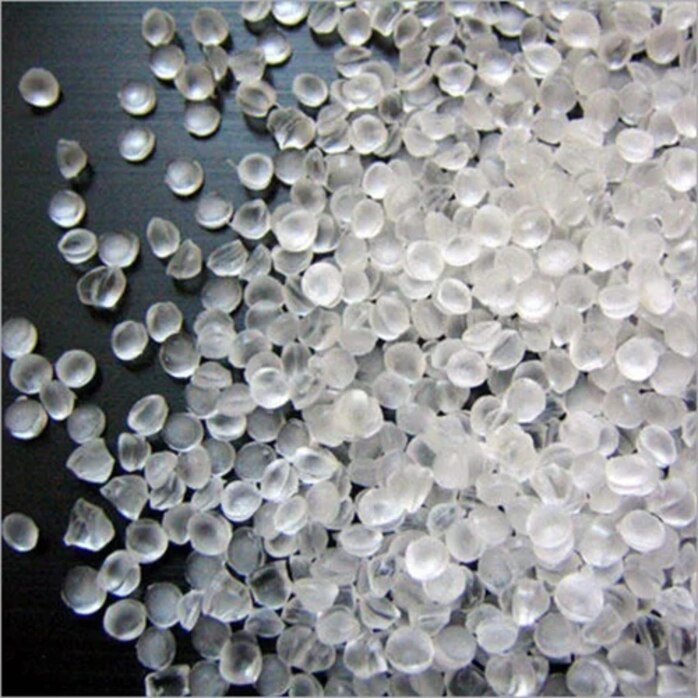
A clear pellet does not guarantee a clear finished part: fusion, heat history, wall thickness, cooling, contamination and surface condition all affect the result. By the end, you will know how to define optical acceptance, set a practical processing trial, inspect incoming lots and choose a PVC transparent compound for the forming process and end use.
Key takeaways
- Specify clarity at the finished wall thickness, not from pellet appearance.
- Define haze, colour, surface-finish and mechanical targets before selecting a grade.
- Run trials across processing temperatures before approving a transparent PVC compound.
- Inspect every incoming lot for colour, contamination, moisture and fusion behaviour.
Start With the Finished Part, Not the Pellet
PVC transparent granules need to deliver a uniform, defect-free finished part—not merely a clear-looking pellet. The part must provide the required optical clarity and transparency at its specified wall thickness, while retaining stable colour, surface finish and mechanical performance after fusion, cooling and finishing.
A pellet can look clear yet produce haze when unmelted particles, gels, contamination, poor fusion, weld lines or rough surfaces scatter light.
Set the target on a molded plaque or the actual article geometry. Define gloss versus haze: high gloss describes surface reflection, while low haze means less light is scattered through the part; neither term alone proves adequate light transmission. Judge the finished surface, not just the hopper contents.
Use this finished-part checklist:
- Require consistent transmission, colour and appearance across the specified thickness, with no black specks, gels, streaks or visible flow defects.
- Control filler loading, particle size, dispersion and refractive-index matching; even a low filler level can create visible haze when agglomerates scatter light.
- Confirm that flexible parts retain the required hardness and low-temperature flexibility without tack, blooming or later haze after contact with oils, fuels or other extracting media.
- Specify outdoor UV and weathering performance separately, because stabilizers or absorbers can change colour, haze and transmission.
- Specify fire performance separately from clarity, including the applicable test method and specimen thickness, such as UL 94 where that classification applies.
Define Clarity With a Testable Optical Specification
Approve the finished article, not the pellet. A granule can look clear yet produce a cloudy part because of incomplete fusion, processing history, cooling, wall thickness or surface roughness.
Measure molded plaques made under production-equivalent conditions, using a defined sample thickness. If the product geometry affects viewing, test the actual article as well. ASTM D1003 reports two separate properties: luminous transmittance, the total light passing through the specimen, and haze, the percentage of transmitted light scattered from its original direction.
Write numerical limits into the purchasing specification:
- Minimum luminous transmittance at the stated sample thickness
- Maximum haze at that same thickness
- Specimen conditioning, measurement direction and viewing condition
- Number of specimens, test locations and averaging method
- Colour limit after processing, if yellowing or tint affects acceptance
Do not approve a batch because it “looks transparent.” Compare instrument results with the agreed limits, and retain the tested plaque or article with its lot number for traceability. Thickness matters: two compounds can show similar transmittance at different thicknesses, while haze can rise sharply as the wall becomes thicker.
Keep optical approval separate from fire, weathering and UV requirements. A clear compound is not automatically compliant with UL 94, and stabilizers or UV absorbers can change colour, haze and transmission. Define those tests, classifications and specimen thicknesses independently.
Build a Processing Window Before Approving a Grade
Approve a transparent PVC grade only after it produces acceptable plaques or parts across a defined processing window. Hold the compound and geometry constant while changing one condition at a time; a clear pellet can still produce haze, gels, yellowing or weld-line distortion after melting.
Test these variables in a controlled matrix:
- Set the melt temperature and barrel-zone settings from the supplier’s starting conditions, then test lower and higher settings. Excessive heat or a cold zone can prevent uniform fusion; excessive heat can release hydrogen chloride and turn the melt yellow.
- Change screw speed and residence time together with output. High shear, long residence or dead spots can darken the compound, while insufficient shear can leave unmelted particles.
- Repeat the trial after any K-value substitution. A higher K-value increases viscosity and can require different heat, torque or residence time.
- Record cooling conditions, including air, water or mould cooling, line speed, wall thickness and demoulding time. Uneven cooling can create haze, sink marks or surface roughness.
| Condition | Extrusion trial | Injection moulding trial | What to compare |
|---|---|---|---|
| Melt and barrel settings | Step through each zone and record torque, pressure and colour | Record barrel profile, injection pressure and cushion | Fusion without yellowing or gels |
| Die or mould temperature | Compare die temperature at constant output | Compare mould temperature at constant fill and hold | Gloss, haze and weld-line visibility |
| Cooling | Vary cooling time and line speed | Vary cooling time and demoulding point | Distortion, surface finish and optical results |
| Residence time | Test normal and extended hold-up | Test normal and delayed cycles | Discoloration after heat history |
Inspect Each Incoming Lot for More Than Colour
Check each lot against a written receiving specification before it reaches the hopper. Confirm the approved compound, intended process, batch number, permitted regrind content, and certificate of analysis; a PVC resin grade alone does not identify the stabilizers, lubricants, plasticizer, or processing aids that affect clarity.
- Inspect a representative sample under consistent lighting for black specks, gels, yellowing, foreign particles, and unusual granule colour.
- Check packaging for tears, moisture ingress, damaged seals, incorrect labels, and mixed or missing lot identification.
- Measure moisture with the supplier’s stated method. PVC has low water absorption, so do not impose a polyamide or PET drying cycle; wet packaging, fillers, additives, or contaminated regrind can still cause bubbles, splay, and feeding problems.
- Verify bulk density and pellet size against the approved range. Variation can cause hopper segregation, unstable feed rate, and inconsistent melt residence time.
- Compare the lot with a retained approved sample for colour, flow, and visible contamination.
- Run a controlled trial to check fusion behaviour, yellowing, haze, and melt stability before releasing the material to production.
Clear granules do not guarantee a clear part. Mold or extrude a defined sample, then measure colour and haze at the agreed thickness, using ASTM D1003 where applicable. Hold the lot if the plaque shows poor fusion, excessive haze, or lot-to-lot colour variation, even when the pellets pass visual inspection.
Match the Compound to the Process, Formulation and Risk
Choose the compound by the failure you cannot afford, not by the clearest pellet. A rigid indoor guard needs a different formulation from a flexible hose, outdoor cover or regulated food-contact article.
| Priority | Formulation direction | Trade-off or risk |
|---|---|---|
| Maximum clarity | Use a well-fused PVC compound with a compatible heat stabilizer, controlled lubricant package and little or no filler | Excess lubricant can cause plate-out; filler particles and agglomerates scatter light |
| Flexibility | Select a compatible plasticizer at the hardness and low-temperature flexibility you need | Poor compatibility can cause migration, tack, blooming or long-term haze |
| Impact resistance | Add an impact modifier only to the level proven by impact testing | The modifier can reduce transparency, gloss or stiffness |
| Outdoor weathering | Specify UV protection and weathering performance separately from optical limits | Stabilizers or absorbers can shift colour, haze or transmission |
| Cost control | Compare compound cost with scrap, rejected parts and additive-related processing changes | A cheaper filler-loaded grade can cost more through visible haze and weak fusion |
Do not treat clear PVC as automatically compliant. State the application, contact medium, service temperature, specimen thickness and required evidence; food-contact work needs migration and residual-monomer documentation, while fire performance requires a named method such as UL 94.
Ask Aim Plastic for the complete formulation description, intended extrusion or injection process, processing window and post-processing colour or haze limit. That information lets you compare like with like instead of buying resin grade alone.
Related products
 | PVC Transparent Granules Manufacturers PVC Transparent Granules Manufacturers Aim Plastic stands as a premier PVC transparent granules manufacturer in Delhi, producing high-clarity compounds that meet the most demanding visual... View product → |
 | Aim Plastic is a trusted name for high-quality PVC Plastic Granules, offering dependable material solutions for manufacturers across diverse plastic... View product → |
Frequently asked questions
Why should you start with the finished PVC part instead of the pellet?
The finished part determines the required clarity, wall-thickness performance, colour stability, surface finish and mechanical properties. A clear-looking pellet does not guarantee those results after fusion and cooling.
How can you make PVC transparency a testable specification?
Specify optical performance at the finished part’s wall thickness, then define measurable limits for haze, colour, surface defects and appearance under controlled inspection conditions.
What should you establish before approving a PVC transparent granule grade?
Build a processing window by trialling the grade across the intended temperature, residence-time and cooling conditions, and confirm that clarity and mechanical performance remain stable.
What should you inspect when receiving an incoming lot?
Check the lot identification, pellet colour and uniformity, contamination, moisture or packaging damage, and processing behaviour rather than relying on appearance alone.
How do you match transparent PVC granules to a manufacturing process?
Compare the compound with the extrusion or molding method, formulation, wall thickness, operating conditions and consequences of optical or mechanical defects.