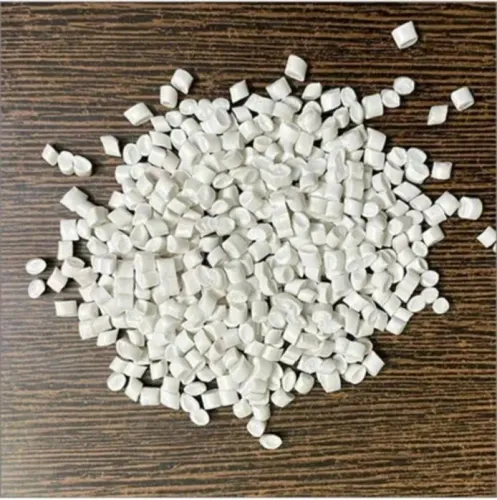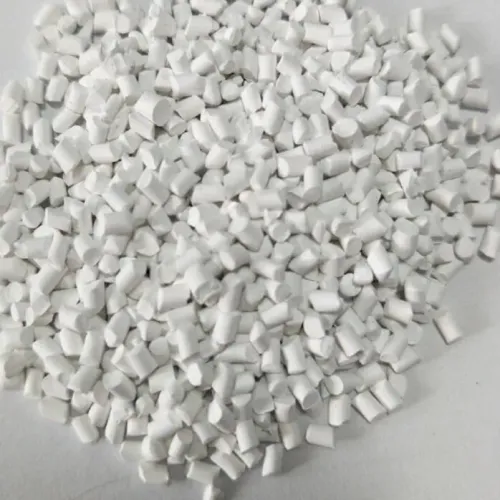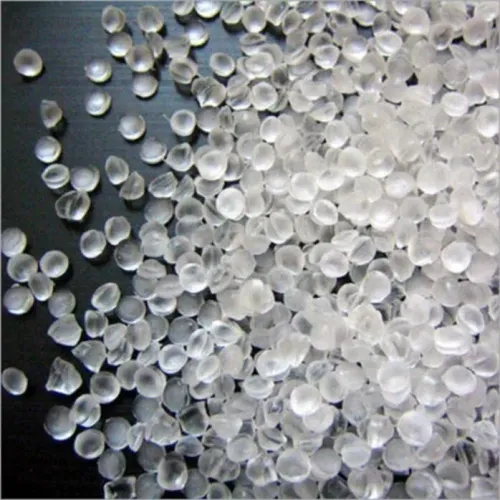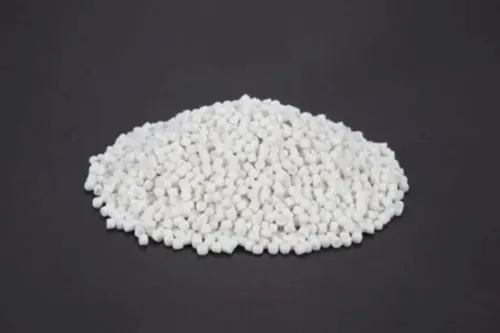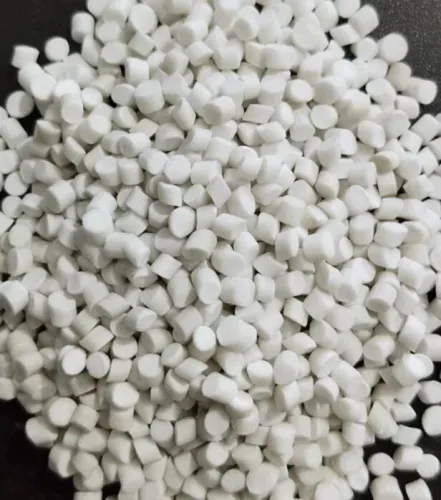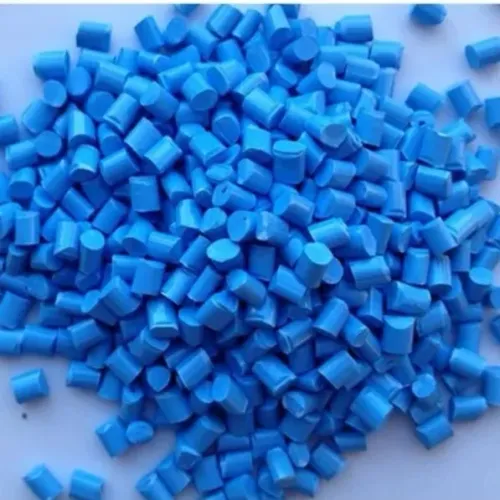
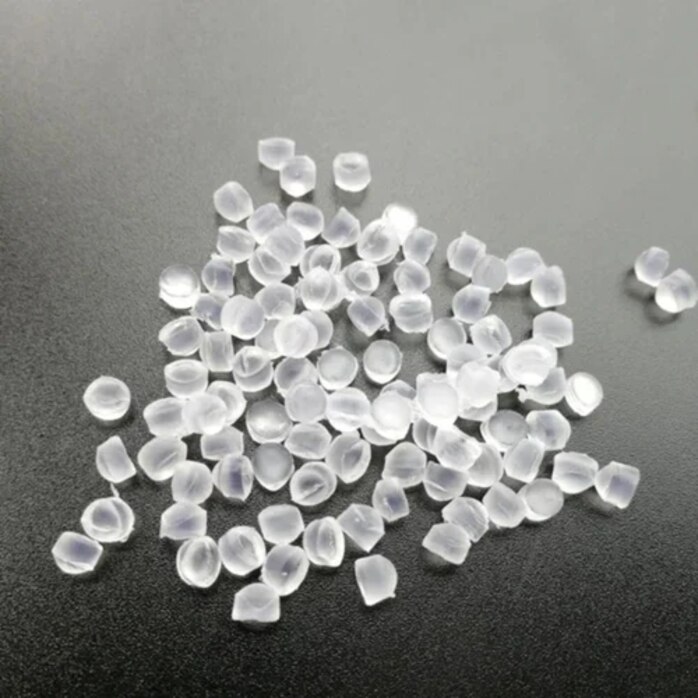
The right choice depends on more than whether a part needs to bend. You will be able to match soft PVC granules to the product’s hardness, service environment, molding or extrusion process, testing needs, and total production cost—while recognising when another material or an in-house blend is the better route.
Key takeaways
- Choose soft PVC granules for controlled flexibility, elongation, and recoverable compression.
- Match Shore A hardness and plasticizer level to the finished part.
- Confirm each lot meets the finished-product requirement before production.
- Compare processing consistency, waste, and total cost—not price per kilogram alone.
Use Soft PVC Granules When the Product and Plant Need Repeatable Flexibility
Choose soft PVC granules when flexible PVC products need a controlled bend radius, recoverable compression, useful elongation, a soft touch, and repeatable production rather than the highest temperature or chemical resistance.
| Option | Decision signal | Main trade-off |
|---|---|---|
| Rigid PVC | Choose for stiffness, dimensional stability, and no required bend | Fails when repeated bending or compression causes cracking |
| PVC rubberised compound | Choose when rubber-like recovery is the priority | Compare rebound, oil exposure, and process control |
| TPU and TPE comparison | Choose TPU or TPE for stronger abrasion, tear, oil, or temperature performance | Higher material cost and different processing requirements |
| EVA or an elastomer | Choose for low-temperature flexibility or rubber performance | Check weathering, electrical insulation, compression set, and bonding |
| Soft PVC granules | Choose for moderate service temperature, good insulation, adjustable touch, and economical extrusion or molding | Plasticizer migration, fogging, and heat limits require validation |
Soft PVC suits tubing, seals, gaskets, cable insulation, flexible profiles, mats, flooring, and molded grips when the required bend radius and elongation are achievable without excessive compression set. Check abrasion, oil contact, outdoor weathering, and service temperature before selecting it; an elastomer or TPU wins when those exposures exceed the compound’s validated limits.
Granules fit automatic gravimetric or volumetric feeding because consistent bulk flow reduces dust, weighing, and dispersion work. The plasticizer, stabilizer, lubricant, pigment, and filler are already homogenized. That consistency costs flexibility: precompounded granules limit late changes to hardness, colour, and filler loading, while dry blends suit frequent formulation changes or integrated high-throughput compounding.
Match Shore A Hardness and Plasticizer Level to the Finished Part
Choose a Shore A band from the finished part’s compression, bend radius, grip, and recovery requirements—not from the label “soft PVC.” Measure the molded or extruded part, because wall thickness and cooling can shift hardness from the granule specification.
| Application | Starting Shore A target | Selection logic |
|---|---|---|
| Tubing and soft seals | 35–60 | Lower hardness suits tight bends; higher hardness resists collapse. |
| Flexible profiles and cable insulation | 55–75 | Balance flexing, tear resistance, electrical construction, and dimensional stability. |
| Mats and flooring | 65–85 | Increase hardness for traffic, indentation, and abrasion resistance. |
| Gaskets | 45–75 | Select for compression sealing without excessive permanent set. |
| Molded grips | 50–80 | Match hand comfort against abrasion, tear resistance, and weld-line strength. |
Put the specified Shore A hardness, target range, ASTM D2240 method, scale, and conditioning period on the purchase specification. Measure the finished part after that conditioning period; initial hardness alone cannot prove durability. Also test PVC tensile strength and elongation using the method required for the product.
A higher PVC plasticizer level lowers modulus and hardness but can increase elongation, odor, fogging, extraction, volatilisation, contact-migration, and long-term embrittlement after loss. Plasticizer type, PVC molecular weight, filler loading, and stabilizer package also change tensile strength, fusion, heat stability, and flexibility; heavy filler loading can reduce elongation and increase processing torque.
Request extraction, volatilisation, contact-migration, heat-aging, oil, detergent, and weathering data for the exposures that apply. For food contact, require documentation against Regulation (EU) No 10/2011 and Regulation (EC) No 1935/2004.
Set the Granules Up Differently for Extrusion and Injection Molding
1. Obtain the supplier’s process sheet before running soft PVC granules. Record the recommended melt-temperature range, PVC barrel temperature profile, residence-time limit, screw compression ratio and shear limit, die or mold temperature, back pressure, output rate, cooling method, packaging limits, foreign-particle tolerance, permitted pre-drying, and regrind percentage.
2. For soft PVC extrusion, separate settings by product: cable insulation needs stable concentricity and controlled cooling; tubing needs low air entrapment and consistent wall thickness; profiles need controlled die temperature and haul-off; flooring needs uniform surface finish and shrinkage control.
Match the supplier’s zone profile to your screw, then check feeding, pressure, PVC die swell and fusion, rough surfaces, sticking, colour streaks, incomplete fusion, and dimensional drift.
3. For soft PVC injection molding, obtain settings for grips, seals, mats, and molded components separately. Confirm mold temperature, injection speed, back pressure, screw shear, residence time, cooling cycle, and output rate; excessive heat or hold time can release hydrogen chloride, causing discoloration and brittle, poorly fused parts.
Check short shots, trapped air, weld lines, sticking, sink or shrinkage, and unstable weight.
4. Condition sealed packaging before opening, reject condensation or foreign particles, and pre-dry only when the supplier permits it. Calibrate gravimetric or volumetric feeders with the actual granule bulk density and particle-size distribution.
Test regrind separately and stay within the stated limit; mixed colours, grades, or contaminated regrind can cause unstable feeding, surface defects, and variable hardness.
Validate the Lot Against the Finished-Product Requirement
Match each incoming lot to the retained trial sample and approved formulation before production. PVC granule quality control starts with a documented receiving check, not with the first molded part.
- Record the lot number and compare it with the supplier’s certificate of analysis.
- Compare colour against the approved sample under the same lighting.
- Inspect particle size, shape, surface, agglomeration, and visible degradation.
- Measure bulk density and confirm the feeder calibration remains valid.
- Check moisture, condensation, wet packaging, and storage exposure; reject contamination that exceeds the agreed limit.
- Inspect for foreign particles and apply the specified foreign-particle tolerance.
- Measure specific gravity against the trial material.
- Check bag or liner seals, pallet condition, labels, and signs of damage.
These checks describe granules, not product performance. Mold specimens using the approved process, then measure hardness with ASTM D2240, tensile strength and elongation with ASTM D638 for plastic specimens, and density with ASTM D792. Use ASTM D412 when the product is evaluated as an elastomer-style specimen.
For cable insulation, request applicable IEC 60811 evidence alongside electrical, flame, temperature-rating, and aging data for the complete construction. Confirm the current standard edition, specimen preparation, conditioning, and application requirements with the laboratory or customer specification.
For food-contact articles, obtain documentation under Regulation (EU) No 10/2011 and Regulation (EC) No 1935/2004, including intended use and migration support.
Compare Suppliers and Total Cost Before You Commit to a Grade
Approve a grade on cost per acceptable part, not compound price alone. Add dust control, weighing, mixing, labour, scrap, changeover time, feeder calibration, testing, and stock-keeping units to the comparison.
Choose granules when consistency and labour savings outweigh the premium; retain an in-house blend when formulation changes, very high throughput, or integrated compounding delivers a measurable advantage.
| Option | Cost and control trade-off | Best fit |
|---|---|---|
| Ready-to-process granules | Higher material price; lower dust, weighing, dispersion, labour, and changeover burden | Repeatable production with limited late formulation changes |
| In-house dry blend | Lower formulation cost potential; higher handling, mixing, calibration, and scrap exposure | Frequent hardness, colour, or filler adjustments |
For a PVC compound supplier evaluation, request a soft PVC technical data sheet and certificate of analysis showing:
- Shore scale and hardness range; specific gravity; tensile and elongation targets
- Plasticizer system, filler loading, thermal-stability guidance, processing window, and feeder conditions
- Lot traceability, packaging, storage temperature and limits, and the PVC regrind policy
Require the supplier to state allowable regrind percentage and source. Clean offcuts are not automatically interchangeable across hardness grades, colours, or plasticizer systems; mixed material can shift hardness, contaminate surfaces, and destabilise processing.
Aim Plastic becomes relevant when it supplies that defined compound, lot-level evidence, and process guidance for comparing granules with your current dry-blend route. Record scrap and cycle losses after a controlled trial before switching.
Related product
 | Aim Plastic is a trusted name for high-quality PVC Plastic Granules, offering dependable material solutions for manufacturers across diverse plastic... View product → |
Frequently asked questions
When should manufacturers choose soft PVC granules?
Choose them when the product needs controlled flexibility, a defined bend radius, recoverable compression, useful elongation, or a soft-touch surface.
How should you match soft PVC granules to a finished part?
Match the granules’ Shore A hardness and plasticizer level to the part’s required flexibility, compression response, elongation, and surface feel.
Do extrusion and injection molding require different granule setups?
Yes. Review the granule formulation and processing window against the chosen process, including feeding, melting, filling, cooling, and dimensional control.
How can you validate a soft PVC granule lot?
Test the lot against the finished-product requirement, including hardness, dimensions, flexibility, appearance, and production performance.
How should you compare soft PVC granule suppliers?
Compare consistency, technical documentation, lot validation, processing performance, rejection risk, and total cost alongside the quoted material price.