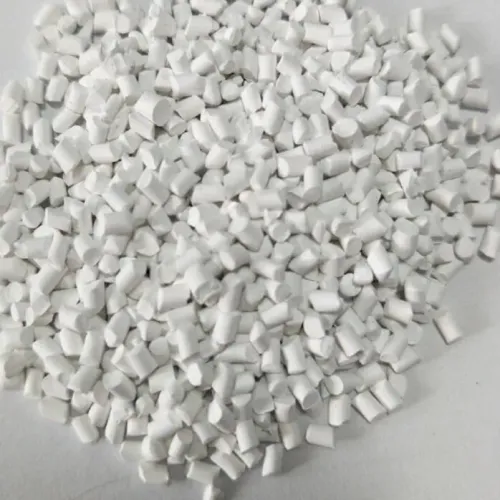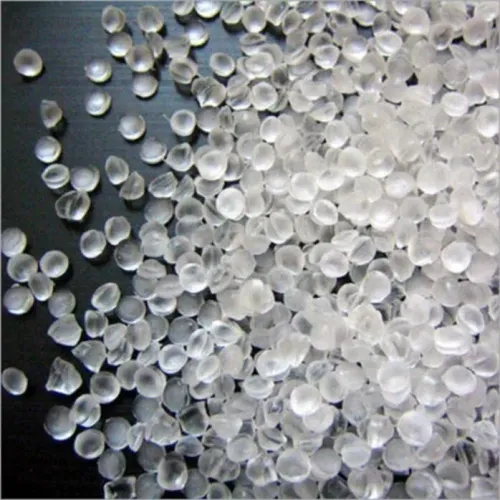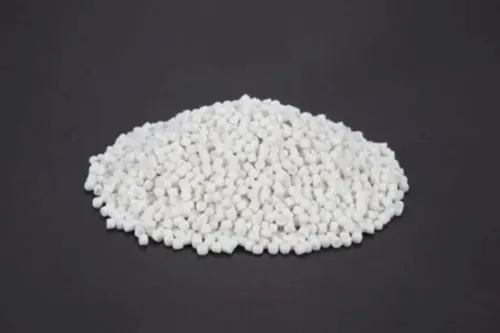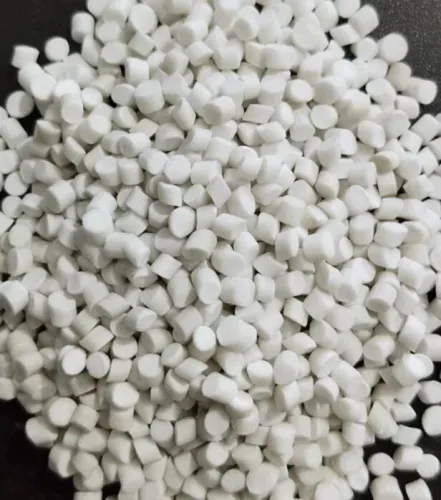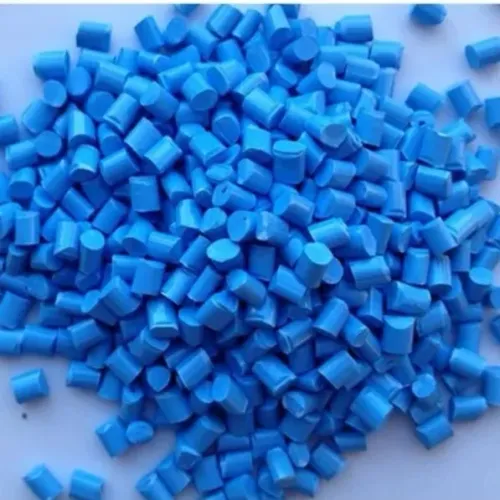
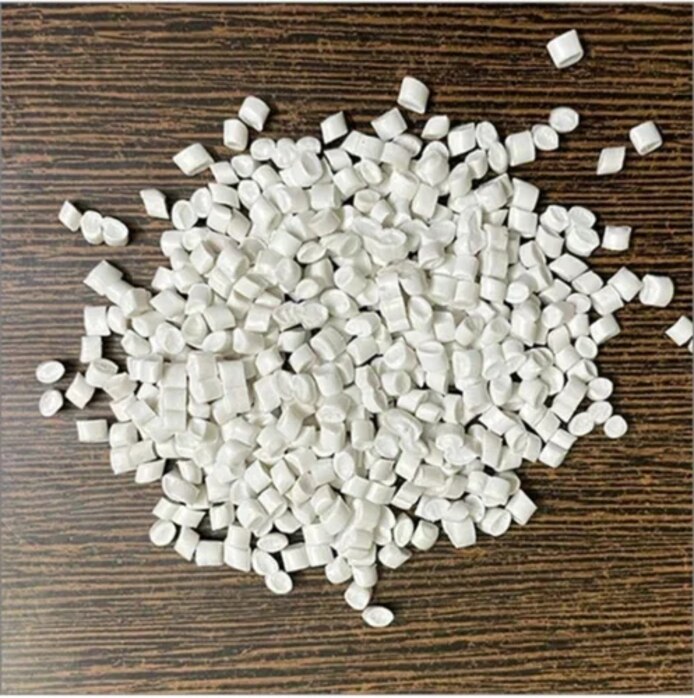
A change in PVC granules can alter feed rate, fusion, colour, pressure, surface appearance and finished-part strength even when the machine settings remain unchanged. By tracing those effects from material properties through setup and troubleshooting, you can identify whether a defect comes from the compound, the process or the tooling and make a controlled batch change.
Key takeaways
- Compare melt flow, fusion time, moisture, bulk density, and particle size before switching batches.
- Match fusion time with residence time to prevent unmelted specks and pressure swings.
- Separate poor fusion from overheating by checking torque, melt temperature, colour, and residence time.
- Record batch data, processing windows, and test results before approving a supplier change.
Which granule properties change PVC processing behaviour?
PVC granule melt flow controls how readily the material fills the screw, mould or die. PVC fusion time determines when particles become a continuous melt; poor matching between fusion time and residence time causes pressure swings, dullness, unmelted specks or unstable dimensions.
| Property | Processing effect | Finished-part risk |
|---|---|---|
| PVC granule melt flow | Changes screw fill, injection pressure and die pressure | Variable output, short shots or flashing |
| PVC fusion time | Sets the heat and residence time needed for complete fusion | Weak welds, roughness and poor impact strength |
| Plasticiser level | Lowers viscosity and increases flexibility | Dimensional change, softness or inconsistent hardness |
| Stabiliser package | Controls resistance to heat and shear during processing | Yellowing, brown streaks or black specks |
| Filler loading | Raises stiffness and can increase die pressure | Lower impact strength, gloss loss or filler agglomerates |
| Particle size and geometry | Changes feeding, bulk flow and apparent density | Starvation, bridging, colour variation or local under-fusion |
| Moisture and fines | Increase dust, segregation and inconsistent feeding | Pinholes, surface defects and fluctuating output |
Bulk density also changes hopper capacity and volumetric feeder calibration, even when the formulation is identical. Fines can separate from larger granules, while oversized or irregular particles can interrupt screw fill.
Treat regrind by source, formulation family and permitted proportion. Repeated heating, mixed colours, different filler levels or another stabiliser package can narrow the thermal window. Increasing screw speed may raise output but also raises shear heat; stable fusion and pressure matter more than maximum kilograms per hour.
What should you verify before changing a PVC granule batch?
Confirm the new batch against its certificate of analysis before changing settings. Check the PVC resin grade, Shore hardness, PVC density, Vicat softening temperature, tensile strength, elongation, colour value, ash or calcium-carbonate content, and bulk density.
- Compare bulk density with the approved batch; a change alters hopper capacity, screw fill and volumetric-feeder calibration.
- Inspect sealed packaging for condensation, wet granules, fines, foreign polymer, metal and degraded particles.
- Record the approved batch’s output, melt pressure, torque, colour and surface appearance as trial targets.
| Process | Confirm before starting | Adjust during the trial |
|---|---|---|
| Extrusion | Output, melt pressure, torque and residence time | Barrel-zone temperatures, die temperature, screw speed, line speed and cooling |
| Injection moulding | Shot weight, fill time, cushion and mould temperature | Barrel temperatures, screw speed, back pressure, injection speed and cooling time |
| Both processes | Fusion, colour stability and dimensional consistency | Hold settings steady while comparing the first approved parts |
Do not correct contamination or black specks by raising temperature; retained material in screw flights, screens, adapters, check rings or die lands can degrade and reappear. PVC is not normally dried like nylon, but condensation can cause bubbles, pinholes, splay and dullness.
Run a controlled trial, then approve the batch only after comparing processed colour and finish, not incoming granule colour alone.
Why does the same PVC granule produce different surface finishes in each process?
The same granule produces different finishes because each process imposes a different combination of shear, heat, pressure, cooling and tool contact. The melt can replicate a polished die, mould or roll—or expose poor fusion, filler agglomerates, lubricant plate-out and contamination.
1. In extrusion, stable feeding and residence time control the PVC extrusion surface finish. Excessive screw speed, restrictive dies or weak cooling can create sharkskin, orange peel and gloss variation; deposits at the die create streaks or die buildup. Haze also appears when unmelted particles or poorly dispersed filler scatter light.
2. In injection moulding, fast filling freezes the skin against the mould before the core finishes packing. That produces PVC injection moulding defects such as flow marks, weld lines and sink marks; low mould temperature, poor venting or insufficient holding pressure makes them more visible.
3. PVC calendering spreads the compound between heated rolls, so roll temperature, nip pressure, roll speed and surface polish determine gloss and haze. Poor fusion or uneven lubrication leaves orange peel, drag marks and thickness variation across the sheet.
4. PVC cable insulation is forced through a die and then cooled around the conductor. Unstable drawdown, die deposits or filler agglomerates create roughness, lines and diameter variation.
Trace each defect back to the process conditions before increasing temperature; heat can worsen degradation without dissolving incompatible specks.
How can you tell poor fusion from PVC overheating or degradation?
Separate PVC poor fusion from overheating by reading the pattern, not one defect alone. Under-fused material has not gelled evenly; overheated material shows chemical damage from excessive temperature, shear or residence time.
- Dullness and roughness usually indicate poor fusion, poor melt replication or filler agglomerates. The surface has not formed a uniform melt against the die or mould.
- Weld lines reveal weak joining between flow fronts. They point to insufficient fusion, low melt temperature or excessive cooling before the fronts meet.
- Pinholes can indicate trapped moisture or volatiles, but repeated pinholes with rough areas suggest poorly dispersed filler or incomplete fusion.
- Unmelted specks are a direct warning of PVC poor fusion, oversized granules or contamination. They create weak points and a grainy fracture.
- PVC yellowing signals early PVC dehydrochlorination. Brown streaks indicate more advanced local overheating, long residence time or material retained in a dead spot.
- A hydrochloric-acid odour confirms active dehydrochlorination; stop and investigate ventilation, temperature, residence time and stabilisation rather than raising heat.
- PVC black specks usually mean severely degraded material released from a screw flight, adapter, screen, check ring or die land. Purging only the barrel may leave the source untouched.
How should you troubleshoot defects before blaming the granules?
Do not change the batch until you have isolated the process variable. A controlled check prevents you from raising heat and turning a small defect into PVC degradation.
1. Check PVC granule moisture first. Look for condensation, splay, bubbles, pinholes or dull patches. Stabilise storage conditions, inspect the feed throat, and dry only according to the compound supplier’s guidance; PVC is not normally treated like nylon or PET.
2. Stop the line and inspect for PVC contamination. Sieve or examine granules for metal, paper, foreign polymer, mixed colour, degraded regrind and hard specks. Do not use higher temperatures to dissolve them; incompatible particles can remain as gels while extra heat causes yellowing or brown streaks.
3. Verify the machine: hopper feeding, bulk-density calibration, screw speed, back pressure, barrel temperatures, residence time, screens, screw flights, check ring and adapter. Purge dead spots because retained PVC can release delayed black specks.
4. Inspect the die for damage, buildup, misalignment and restricted flow. PVC die lines can come from a scratched land or deposit, not the compound.
5. Confirm cooling temperature, flow, contact and line speed. Uneven cooling creates distortion, gloss variation and unstable dimensions.
6. For injection moulding, check PVC mould venting, gate balance, fill speed and clamp alignment. Trapped air causes burns, voids and weld-line weakness.
Only after these checks should you compare a retained sample against a known-good batch under identical settings. A repeatable difference then supports a genuine material defect.
What supplier information turns a PVC batch change into a controlled production decision?
Request the supplier’s PVC certificate of analysis for the exact batch, with resin grade, density, hardness, Vicat softening temperature, PVC calcium carbonate content, colour value, PVC tensile strength, PVC elongation, ash and batch number.
| Evidence | Ask for | Approval decision |
|---|---|---|
| Storage | Sealed, temperature-stable packaging, shelf-life date and condensation controls | Reject wet bags, caked granules or unexplained exposure |
| Drying | Written guidance; PVC is low-hygroscopic, so do not apply nylon or PET drying temperatures by default | Dry only when moisture, condensation or supplier instructions justify it |
| Trial | Results using your machine settings, including pressure, output, colour after processing, dimensions and surface defects | Compare against a signed reference sample before release |
Ask Aim Plastic, or any supplier, to define approved regrind by source, formulation family and maximum proportion. Do not treat mixed colours, stabiliser packages, filler levels or plasticiser levels as interchangeable. Approve the batch only after the trial matches the reference.
Related product
 | Aim Plastic is a trusted name for high-quality PVC Plastic Granules, offering dependable material solutions for manufacturers across diverse plastic... View product → |
Frequently asked questions
Which PVC granule properties change processing behaviour?
Melt flow, fusion time, particle size, bulk density, moisture, plasticizer level, stabilizer package, and filler loading affect feeding, torque, pressure, fusion, and dimensional stability.
What should you verify before changing a PVC granule batch?
Compare the new batch with the approved batch using the technical data sheet, batch number, melt flow, fusion time, moisture, bulk density, colour, and filler content. Confirm the change with a controlled production trial.
Why does the same PVC granule produce different surface finishes in each process?
Screw design, shear, die or mould temperature, cooling rate, line speed, residence time, mould release, and polishing conditions change how the same compound fuses and solidifies.
How can you tell poor fusion from PVC overheating or degradation?
Poor fusion causes unmelted particles, roughness, low gloss, and unstable pressure. Overheating or degradation causes yellowing or browning, burnt odour, black specks, falling viscosity, and excessive melt temperature or residence time.
How should you troubleshoot defects before blaming the granules?
Check feed consistency, hopper bridging, screw speed, barrel and die temperatures, back pressure, cooling, die contamination, mould venting, calibration, and measurement equipment before rejecting the batch.