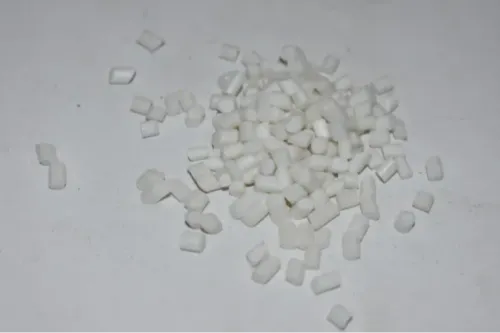
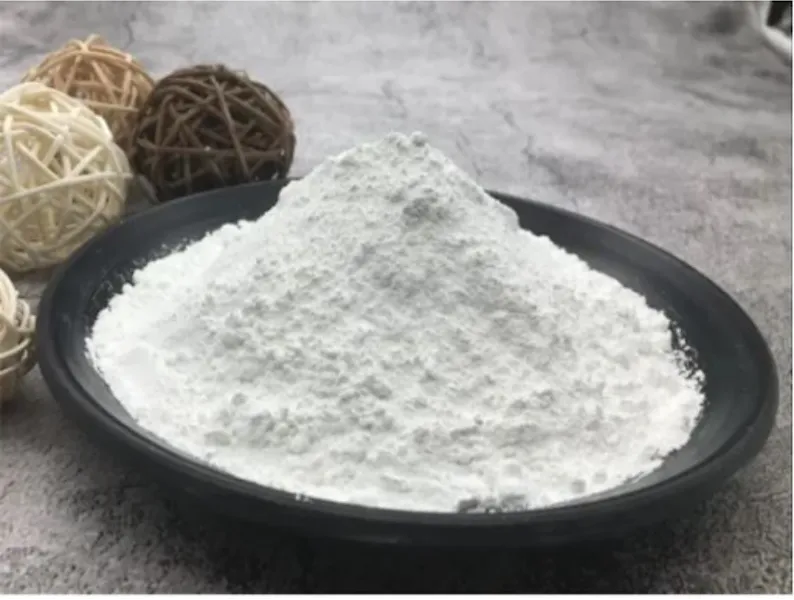
Material formulation is one of the most important parts of plastics manufacturing. Resin provides the polymer base, but manufacturers frequently use additional materials to achieve particular processing, mechanical, dimensional, or economic objectives. Calcium Carbonate Powder is widely used in suitable plastic formulations for this reason.
For plastic processors in Delhi and industrial areas throughout North India, understanding what calcium carbonate contributes to a formulation can help improve purchasing decisions and prevent inappropriate material substitution.
What Is Calcium Carbonate Used For
Calcium carbonate is a mineral-based material used across many industries. In plastics, appropriately specified grades may be incorporated into formulations as a functional filler.
Its role depends on the polymer system, particle characteristics, loading level, processing method, and intended finished product.
It may be considered in applications where manufacturers are seeking an appropriate balance of processing characteristics, rigidity, dimensional behaviour, surface properties, and formulation economics.
Particle Characteristics Matter
Calcium carbonate should not be evaluated simply as a white powder.
Particle size and distribution can influence how the material behaves within a formulation. Surface treatment may also be important in certain polymer systems because it can affect compatibility and dispersion.
Moisture, purity, consistency, and contamination control are other practical considerations.
This means purchasing teams should avoid treating all available grades as interchangeable.
More Filler Is Not Automatically Better
One common misconception is that increasing filler content will always reduce manufacturing costs.
The actual economics are more complicated.
An unsuitable loading level may alter processing behaviour or finished-product properties. If excessive filler leads to brittleness, poor surface finish, processing difficulties, increased rejection, or reduced product performance, the apparent raw-material saving can disappear quickly.
Manufacturers should determine loading based on technical suitability rather than price alone.
Where It May Be Used
Depending on the complete formulation and application requirements, calcium carbonate is commonly associated with various plastic processing sectors.
Potential applications can include suitable formulations for:
- PVC products
- Pipes and profiles
- Extruded components
- Moulded products
- Cable-related formulations
- Plastic sheets
- Certain packaging products
- General industrial plastic articles
Its suitability and concentration should always be evaluated within the complete formulation.
Dispersion Influences Results
Even a suitable filler needs to be distributed properly.
Poor dispersion can contribute to inconsistent appearance, irregular properties, and processing problems. Equipment configuration, mixing quality, temperature control, formulation design, and particle characteristics can all influence dispersion.
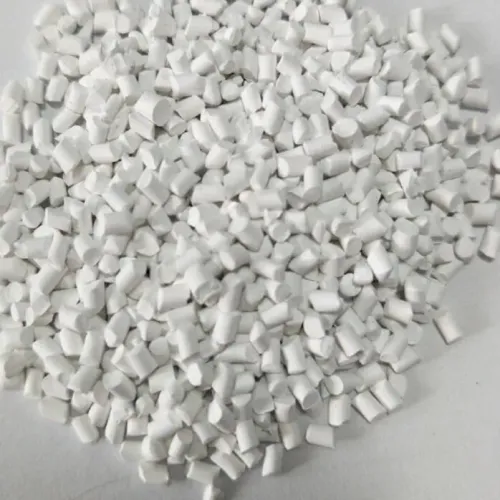
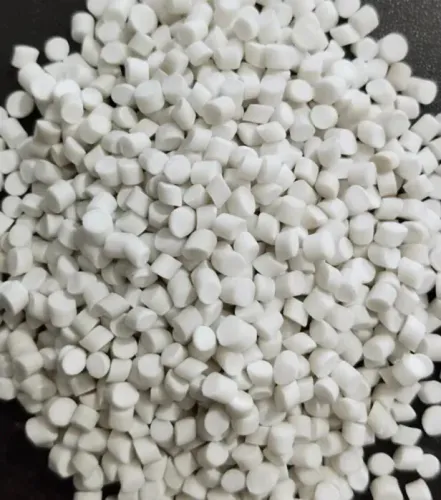
This is one reason processors often evaluate not only the raw mineral powder but also filler masterbatch systems that simplify incorporation into compatible polymers.
Questions Manufacturers Should Ask
Before purchasing calcium carbonate for plastics processing, a technical buyer should clarify the intended use.
Important questions include:
- Which polymer will contain the filler?
- What is the manufacturing process?
- What loading level is being considered?
- Which mechanical properties are important?
- What surface finish is required?
- Are colour consistency and whiteness important?
- Does the product have customer-specific specifications?
These details make supplier discussions more productive.
Making Better Material Choices
Delhi has a broad manufacturing ecosystem encompassing cables, electrical products, packaging, extrusion, moulding, construction products, and other polymer-based industries. Raw-material decisions in these sectors need to balance economics with reliable processing.
Aim Plastic supplies plastic raw materials and formulated solutions for industrial requirements. Buyers evaluating Calcium Carbonate Powder should focus on grade consistency and application compatibility rather than treating filler as a purely commodity purchase.
When calcium carbonate is selected and incorporated appropriately, it can become a useful part of a carefully engineered plastic formulation. The key is understanding what the finished product needs and then choosing the material specifications accordingly.
Keywords