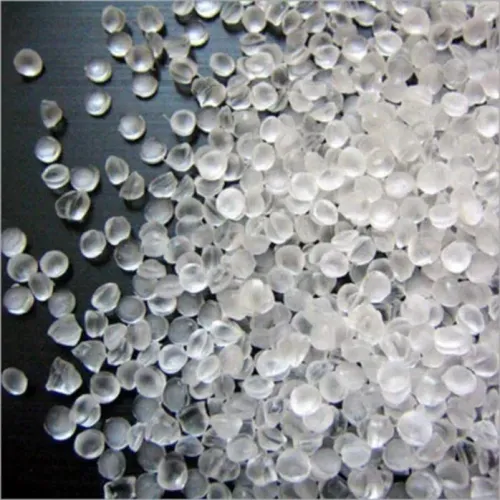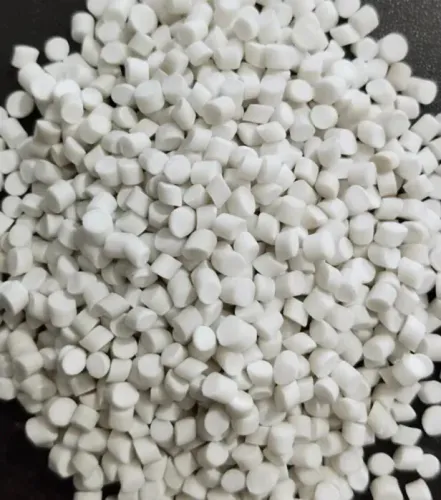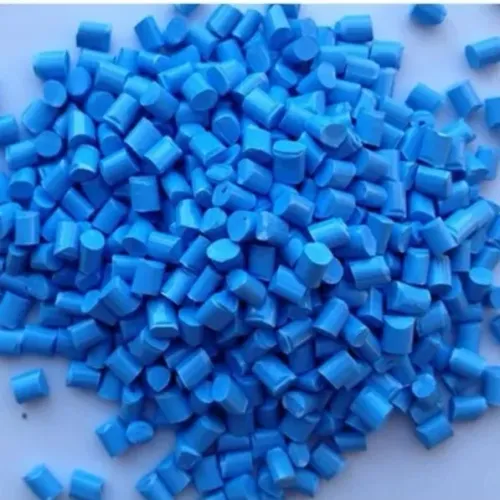

Transparency in PVC products depends on more than appearance alone. Manufacturers need a material that can deliver the required clarity while maintaining flexibility, processing consistency, surface quality, and mechanical performance. This is where PVC Transparent Granules become important for industrial plastic processing.
These granules are formulated for applications where visual clarity is a functional requirement. Depending on the formulation and end use, they can be processed through extrusion, moulding, and other PVC conversion methods.
For manufacturers in Delhi and other industrial markets across India, understanding the characteristics of transparent PVC compounds can make material selection more reliable.
What Makes Transparent PVC Granules Different
Standard PVC formulations may contain ingredients that affect opacity. Transparent grades are developed with carefully selected additives and processing components so the finished material can retain the desired level of clarity.
A suitable formulation typically considers:
- Transparency and visual consistency
- Required hardness or flexibility
- Processing temperature
- Surface finish
- Mechanical strength
- Colour stability
- Compatibility with the intended manufacturing process
The right balance depends on the product being manufactured.
Common Applications of Transparent PVC Material
Transparent PVC is useful across several manufacturing segments. Typical applications can include flexible profiles, transparent tubing, protective components, footwear-related products, packaging components, and selected moulded products.
The required formulation changes with the application. A flexible transparent tube, for example, does not have the same performance requirements as a moulded transparent component.
Manufacturers should therefore avoid selecting material based on appearance alone.
Processing Consistency Matters
Even when clarity is the main requirement, processing behaviour remains critical.
Inconsistent granules can contribute to production issues such as uneven surfaces, variation between batches, processing instability, and avoidable material wastage. Manufacturers running continuous extrusion lines are particularly dependent on predictable material behaviour.
Before selecting a grade, processors should consider their machinery, processing conditions, output requirements, and finished-product specifications.
Factors That Can Affect Transparency
Several factors influence the appearance of the final PVC product.
Raw material quality is one consideration, but processing conditions also matter. Excessive heat exposure, contamination, incompatible additives, and unsuitable formulations can affect clarity.
Manufacturers should evaluate the complete production environment rather than expecting the compound alone to compensate for processing problems.
Storage and handling are equally relevant. Keeping raw material protected from contamination and excessive environmental exposure can help maintain consistency before processing.
Selecting Material According to End Use
A practical approach is to begin with the finished product.
Consider:
- How transparent must the product be?
- Does it need to remain flexible?
- What hardness is required?
- Will it be exposed to heat, moisture, chemicals, or outdoor conditions?
- Which processing method will be used?
- Are there specific dimensional requirements?
Answering these questions helps narrow down the appropriate compound characteristics.
Why Application-Based Formulation Is Important
PVC is highly adaptable because its properties can be modified through formulation. That advantage also means one grade cannot be expected to perform equally well across every application.
A manufacturer producing transparent flexible components may prioritise softness and clarity. Another processor may need dimensional stability and surface finish.
Aim Plastic works within the PVC compounds, masterbatch, and plastic granules manufacturing segment, serving requirements connected with different industrial processing applications.
For buyers and production teams, the key is to communicate the intended application clearly when evaluating PVC Transparent Granules.
Material selection becomes more effective when transparency, processing requirements, mechanical properties, and end-use conditions are considered together. This approach can help manufacturers achieve more predictable production and a finished product that meets its intended functional and visual requirements.
Keywords